Dachigam · Wild Hive · Batch 11 / 2026
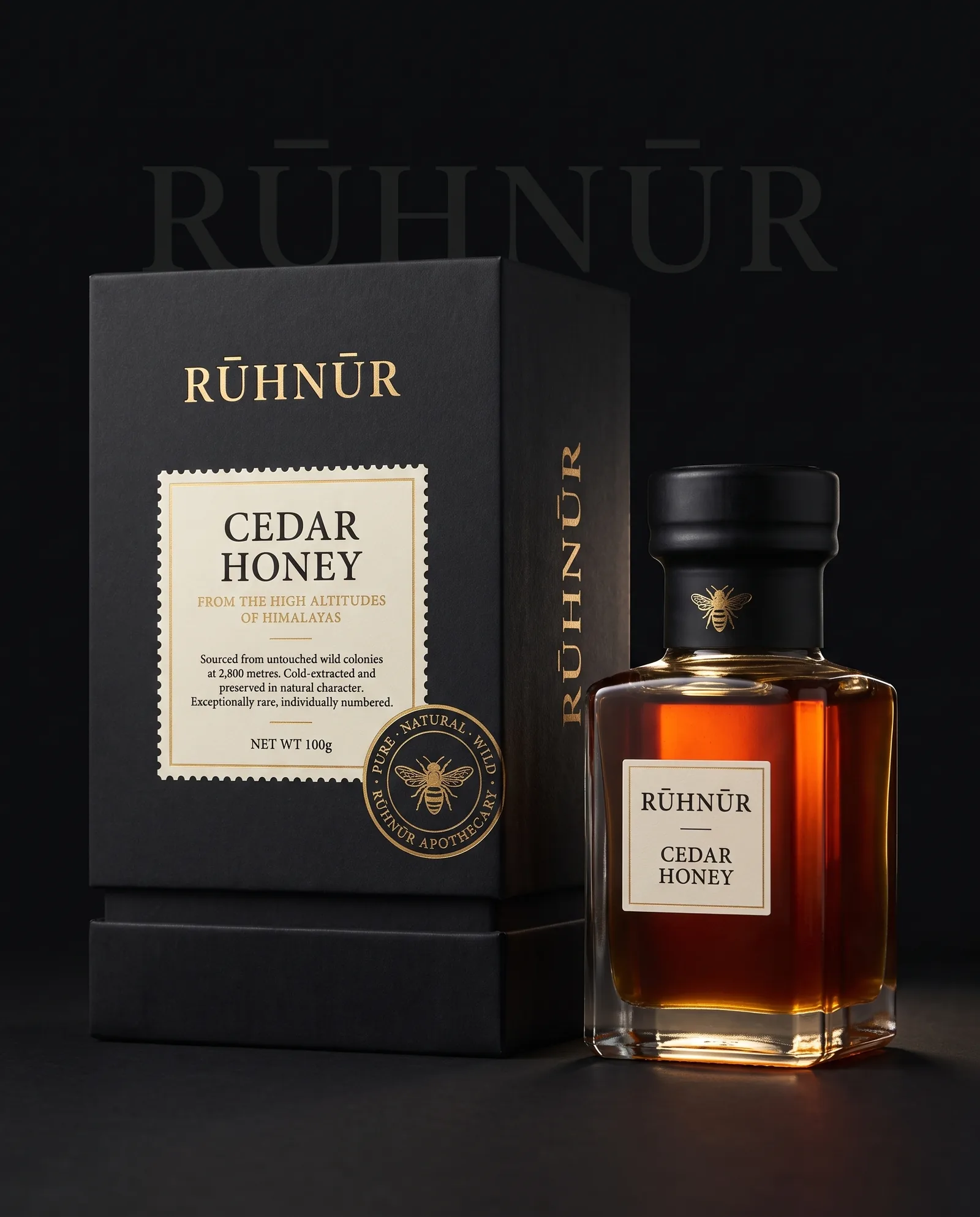
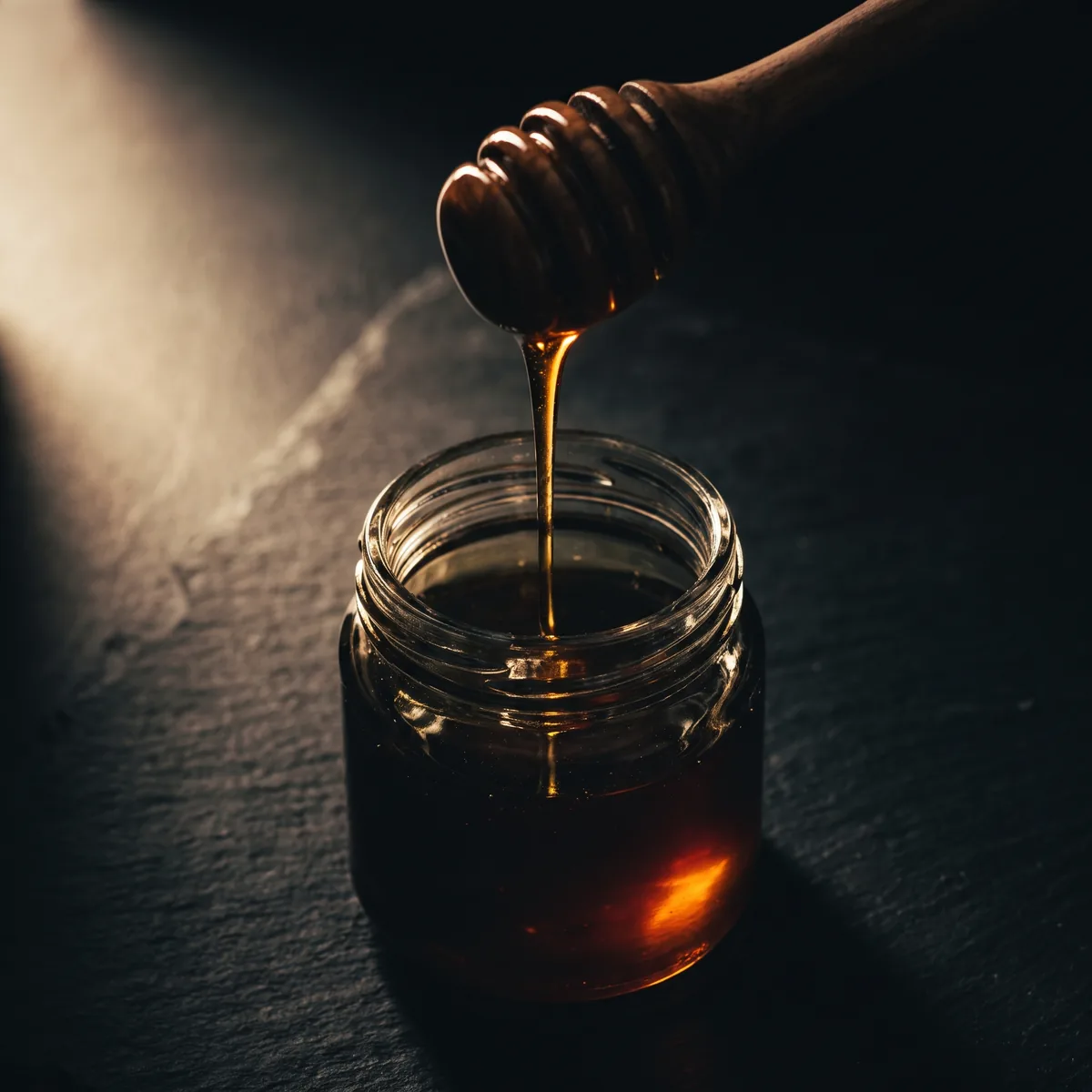
Cedar Honey
From colonies at 2,800 metres that have never been moved or fed.
- Origin
- Dachigam
- Tasting notes
- Resinous cedar, dark caramel, a cool mineral edge.
- Extraction
- Cold-extracted once yearly. Never heated above 45°C.
- Numbering
- Numbered jars, allocated to a closed list.
- Weight
- 100g net
Test key active · no live payments will be taken
The sourcing
These colonies have never been relocated, supplemented, or treated. At 2,800 metres no agriculture reaches them — no pesticide drift, no sugar feeding, no antibiotics. The honey is cold-extracted once a year, which leaves diastase enzyme activity intact; that reading is the marker separating undisturbed honey from anything that has been warmed to move faster. Allocated in numbered jars to a closed list.
The ritual
- 01
Take one teaspoon directly · morning, before water. Let it sit under the tongue for thirty seconds.
- 02
Stir into saffron milk or lemon water. Do not add to anything above 45°C · heat dissolves its character.
- 03
Pair with aged cheese or dark bread. The cedar note strengthens against fermentation.
Properties & traditional use
Intact diastase and invertase, natural hydrogen peroxide, and the polyphenols the cedar and wildflower forage carry in.
- A spoon for the throat
- Raw honey taken slowly off the spoon is the household answer to a rough throat across the valley, and the reason it is kept within reach through winter.
- Never above 45°C
- Heat destroys the enzymes that make raw honey different from the processed kind. Stir it into something warm, not hot, and never boil it.
- Enzymes are the marker
- Diastase activity is what separates undisturbed honey from honey warmed to move faster through a filter. Ours is cold-extracted once a year for exactly that reason.
Offered as background on how these foods have long been used in Kashmiri households, and what they are made of. They are foods, not medicines. Nothing here is a medical claim, and none of it replaces advice from a doctor — particularly if you are pregnant, taking medication, or managing a condition.